Vol. 6 - 2026 Year in Preview: The time is now to invest in the Southside’s Creative Economy
The Building Blocks Column | Volume 6
An exploration of the role of arts, culture and heritage in economic and community development; past, present and future
Check out Building Blocks Volume 1-5 here

79th Street Renaissance Fest - Credit: Barry Brecheisen for the Chicago Sun Times
2026 has the potential to be a watershed year for Chicago’s mid-Southside.
It’s counterintuitive, because 2026 will simultaneously be a year of existential crisis and of generational opportunity. We cannot allow the crisis to cause us to miss the opportunity. And so, as confusing and overwhelming as this moment is, now is the time for Southside creatives to make a full-throated call for the centrality of our work, the extraordinary momentum we’ve gathered, and our potential to generate tangible, long-lasting economic and social benefits for our communities.
Over the course of 2025, Building Blocks has shined a light on what we’re calling the Second Chicago Renaissance, the tremendous flourishing of arts, cultural and heritage activity here on the mid-Southside. We’ve demonstrated how the creative economy is a highly effective catalyst for hyperlocal equitable economic development. We’ve outlined the centrality of arts, entertainment and recreation to Chicago’s booming tourism industry. And we’ve called on Chicago’s leaders - in both the public and private sectors - to recognize this tremendous opportunity to invest in the mid-Southside’s creative economy and cultural infrastructure.
Over the course of 2025, Building Blocks has also explored the current arts funding crisis in depth. We’ve argued that our sector is, in fact, facing three simultaneous crises:
An acute crisis created by the volatility, uncertainty and cruelty of the Trump administration's dismantling of the federal government and attacks on our communities
The still ongoing acute crisis created by the Covid-19 shutdown
The longstanding progressive crisis as the financial models that sustained non-profit arts organizations for decades fail.
These overlapping crises won't end in 2026. Quite the opposite: there is a strong likelihood that they will worsen as the ripple effects of the One Big Beautiful Bill, Trump’s tariff policies, mass deportations and ICE occupations of local communities, and the corruption and incompetency of the Trump administration impact inflation, health insurance premiums, and the already weakening labor market. The vast majority of artists, arts organizations, and creative businesses are struggling to stay afloat as their programs and communities are directly and indirectly impacted by MAGA chaos, cruelty and incompetence.
So, how do we make a full-throated argument that this is a moment of generational opportunity for the mid-Southside’s creative economy when most artists and community groups are struggling to stay afloat?
How do we convince the City of Chicago, Cook County, and the State of Illinois to make major investments in the arts and culture sector as they struggle with complex budget crises exacerbated by federal cuts and the end of the American Rescue Plan?
How do we convey a sense of optimism in this moment of crisis without making struggling artists and organizations feel unseen or erased?
What follows is a short primer on why now is the right time to invest in the Second Chicago Renaissance. It focuses primarily on our economic impact, but you could also focus your argument on all the other tangible social benefits our work generates for our communities.
1. The mid-Southside is primed for growth
The Obama Presidential Center (OPC) is scheduled to open in 2026. Once open, the OPC is estimated to create over 2,000 permanent jobs each year on the Southside. It will attract tens of thousands of visitors each year, significantly expanding Chicago’s tourism map southward.
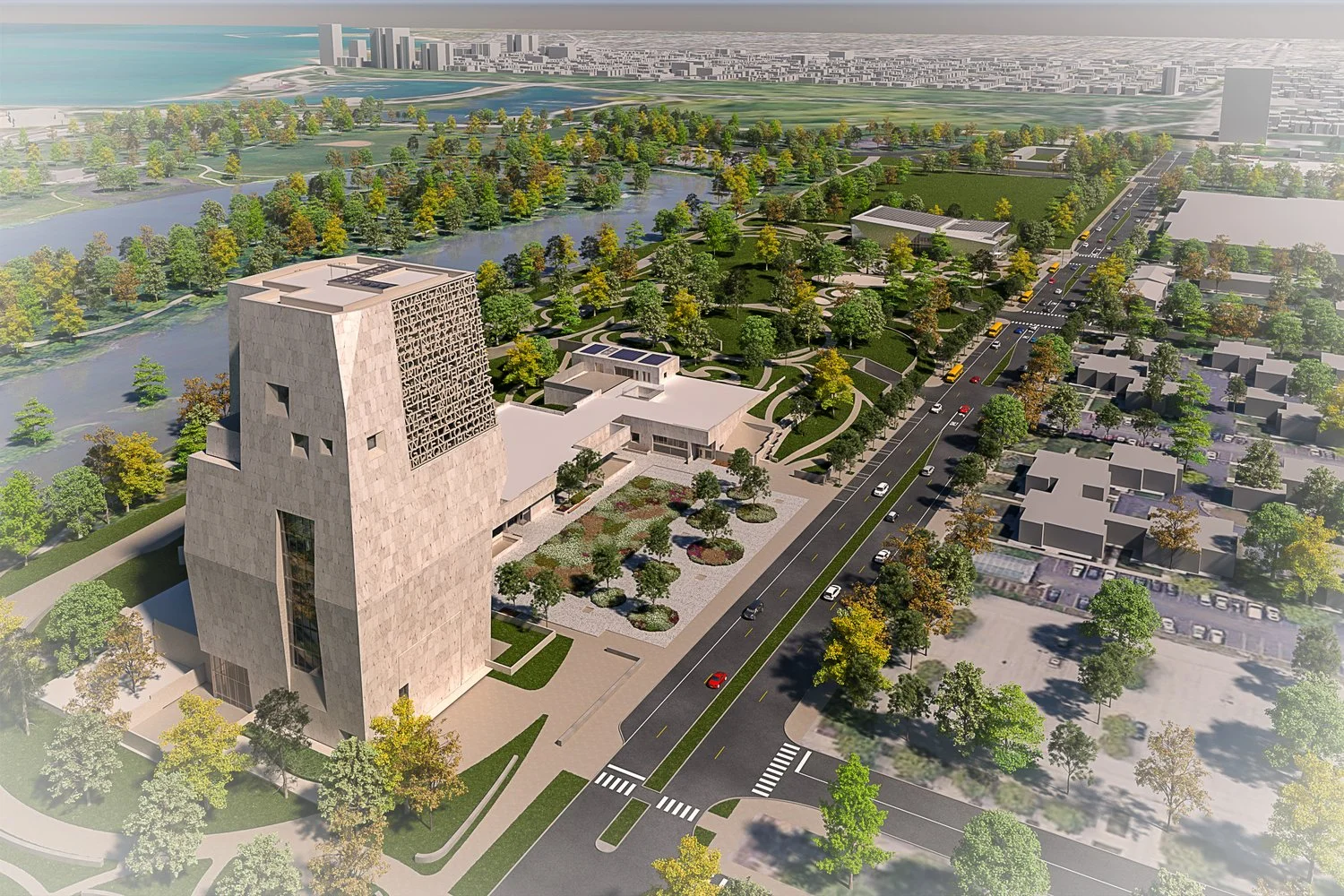
Moody Nolan Designs, Obama Presidential Center
Even before the opening of the OPC, mid-Southside neighborhoods including South Shore, Woodlawn, Bridgeport and Bronzeville are experiencing increased residential and commercial development, increased activity along commercial corridors, and rising income levels. And while most public tourism statistics are reported at a city-wide level, there are indications that Choose Chicago' s Neighborhood Tourism campaign and new cultural institutions including the Ramova Theatre and the Pullman National Historic Park have already begun to increase tourism activity on the Southside.
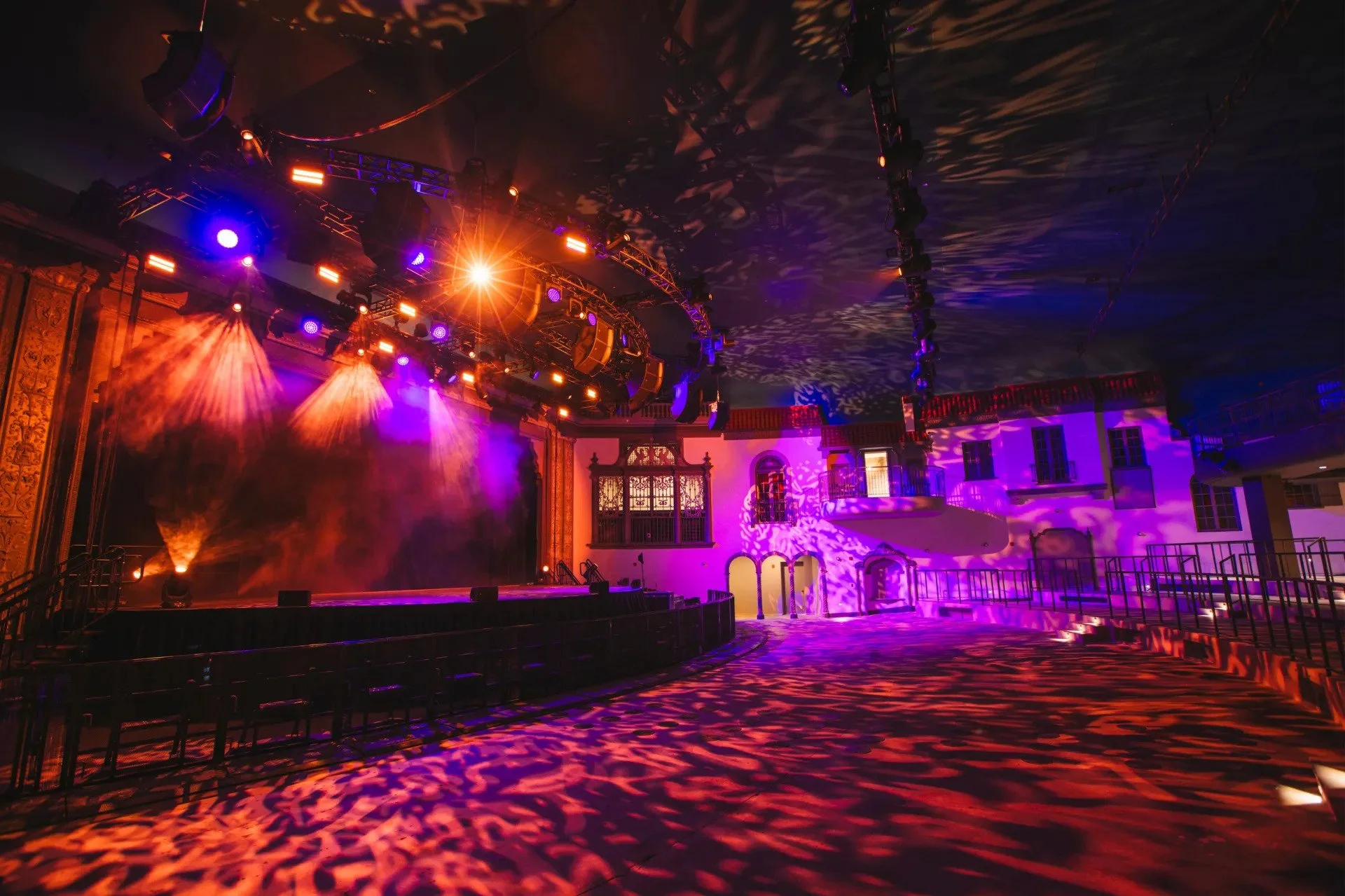
Ramova Theatre - Credit: Clayton Hauck for Ramova
There are legitimate concerns about displacement and questions about whether the economic impact of the OPC and other commercial developments will benefit longtime residents and local small businesses. Chicago needs to simultaneously make significant public sector investments to support economic growth on the mid-Southside and pursue policies to prevent displacement. Because as we are about to explore...
2. From a historical standpoint, this moment of economic opportunity is a BIG DEAL
For decades, Chicago’s Southside has withstood the devastating impacts of segregation; disinvestment; racist economic practices including but not limited to redlining, block busting, and contract sales; urban renewal projects that destroyed entire neighborhoods; the closure of neighborhood schools; and the overall decline of its industrial base. In recent years, the City of Chicago has made a concerted effort to invest in South and Westside communities. While these efforts have been imperfect in many ways, they added financial muscle to the longstanding efforts of community groups, civic leaders and residents to address issues of gun violence, health disparities, economic development, and environmental justice in their communities.
When ICE invaded Chicago, the local and national media did a surprisingly good job of emphasizing that gun violence in Chicago was at its lowest levels since 1968, describing how community-based violence disrupters and other hyperlocal gun violence prevention initiatives were making significant gains across the city. The media did not do a good job of providing the historical context to explain the true significance of the 1968 milestone:
1968 was the year that Dr. Martin Luther King, Jr. was assassinated. Either out of fear of spiraling civic unrest or in retaliation for it, Mayor Richard J. Daley deployed over 10,000 police officers, 7,500 national guard troops and 5,000 U.S soldiers to the Westside and instructed them to “shoot to kill” (WTTW). Decades of disinvestment on both the South and West Sides followed.
1968 was also the year that the Fair Housing act passed, enabling Black Chicagoans for the first time to live wherever they wanted. Over the following decades Bronzeville’s population declined by 75%, as residents relocated to other neighborhoods, the suburbs, or out of state. The 2020 census showed population growth in Bronzeville for the first time since 1950.
In other words, these oft-reported crime statistics suggest that it is only this year that the South and West Sides finally got back to where they were in 1968. Along with the census data and rapidly growing economic development, there are strong indications that the tide of a half-century of disinvestment and racist economic policies on the mid-Southside may have finally shifted.
3. Arts, Culture and Recreation plays a much bigger role in Chicago’s economy than most people think
The Arts, Culture and Recreation sector is vital to Chicago’s short- and long-term economic vitality:
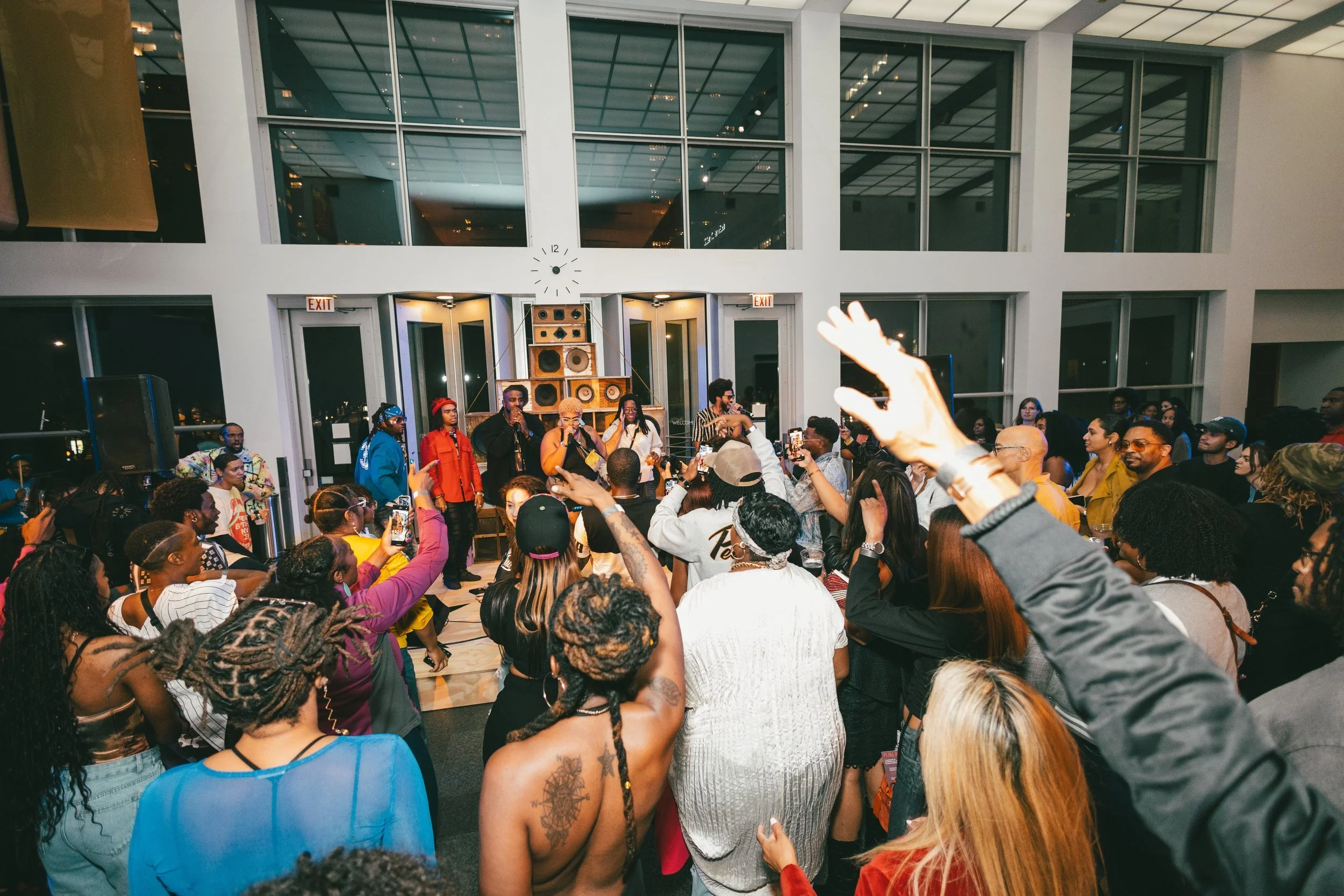
ChiBrations at the Museum of Contemporary Art
We are a major source of private sector employment
We constitute a sizeable percentage of the city’s small businesses
We are the most important driver of tourism to Chicago
We are highly effective local economic multipliers
We support and sustain local commercial corridors
Jobs
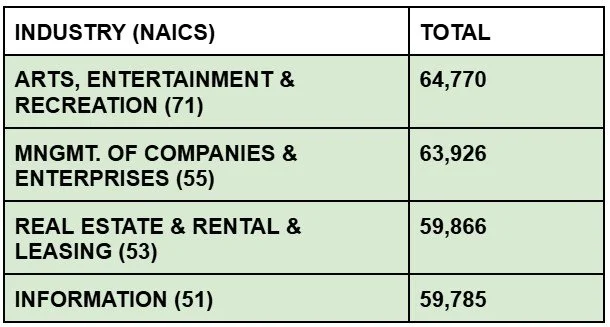
Arts, Entertainment and Recreation is a more significant source of private sector employment than most people realize. In Chicago, the arts and entertainment sector employs a number of people comparable to the construction field." to "In Chicago, the arts and entertainment sector employs a number of people comparable to the construction sector. Across the Chicago Metro Region, we employ more people than information technology. Since many artists work freelance, job data only captures a portion of creative workers; NORC at the University of Chicago estimates that Chicago has over 63,000 working artists.
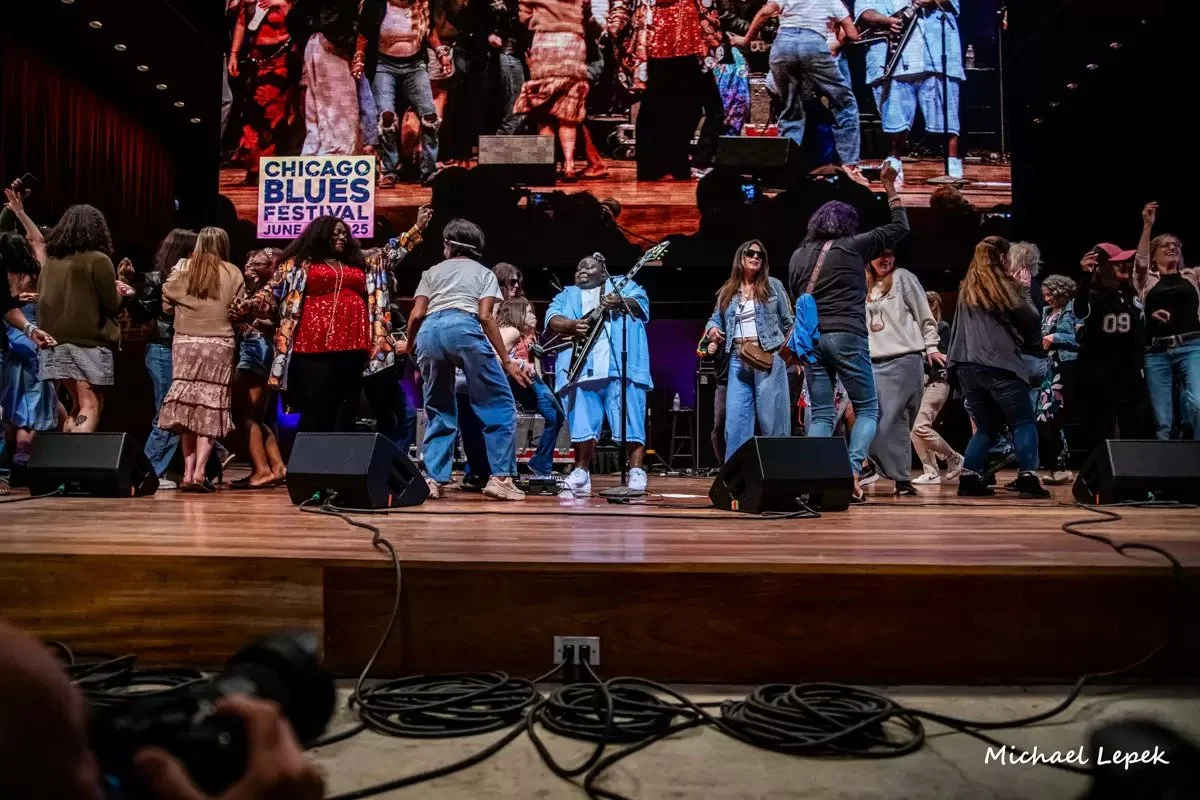
Kingfish performing for the finale of the 2025 Chicago Blues Fest - Credit: Michael Lepek for American Blues Scene
Figure 1 Private Sector Employment in City of Chicago, 2024
Source: Where Workers Work, 2024
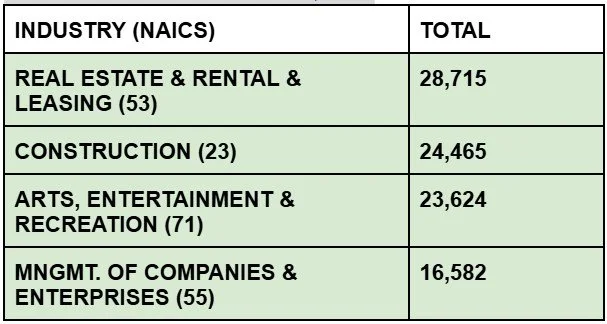
Figure 2: Private Sector Employment across Chicago Metro Area
Source: Where Workers Work, 2024
Small business
Creative sector businesses are a key component of Chicago’s small business landscape. Unfortunately, it is extremely challenging to gauge the true magnitude of Chicago’s creative business landscape. Neither the city nor the state publishes data detailing the number of businesses by NAICS code. The only number I could find by searching published data was a 2019 Assessing Chicago’s Small Business Ecosystem report that utilizes 2012 data. It calculated that Chicago had 2,028 Arts, Entertainment and Media establishments. It would be amazing if the sector could commission a study to determine the total number of small businesses in Chicago and statewide.
What we do know is that:
Creative sector businesses create billions of dollars of direct, indirect and induced revenue for Chicago and Illinois. The film and television sector alone reported $653 million in production expenses and $351 million in wage payments in 2024 (Illinois.gov).
There is tremendous opportunity for creative sector small business growth across the city, but especially on the mid-Southside. As we have frequently noted, there is a flourishing of cultural infrastructure, new creative enterprises, and state of the art production facilities being developed across the mid-Southside.
Public sector investment in creative sector businesses can generate substantial economic (and political) benefits for the city and state. As the Governor’s office stated in April 2025, “The State's [film production] tax credit has resulted in a $6.81 return on investment for every dollar spent on the incentive, resulting in over $4.5 billion in economic activity between FY17 and FY24. 94% of Illinois' current film industry economic impact is attributed to the impact of the tax credit enacted by Governor Pritzker.”
Tourism
As we’ve previously mentioned, the summer of 2025 set the record for the city’s biggest tourism season ever with over 3.5 million rooms booked between June and August. Chicago once again topped Conde Nast Traveler's 2025 Reader's Choice Awards list for Best Big City in the United States. Chicago’s cultural institutions and events are the city’s primary driver of tourism.
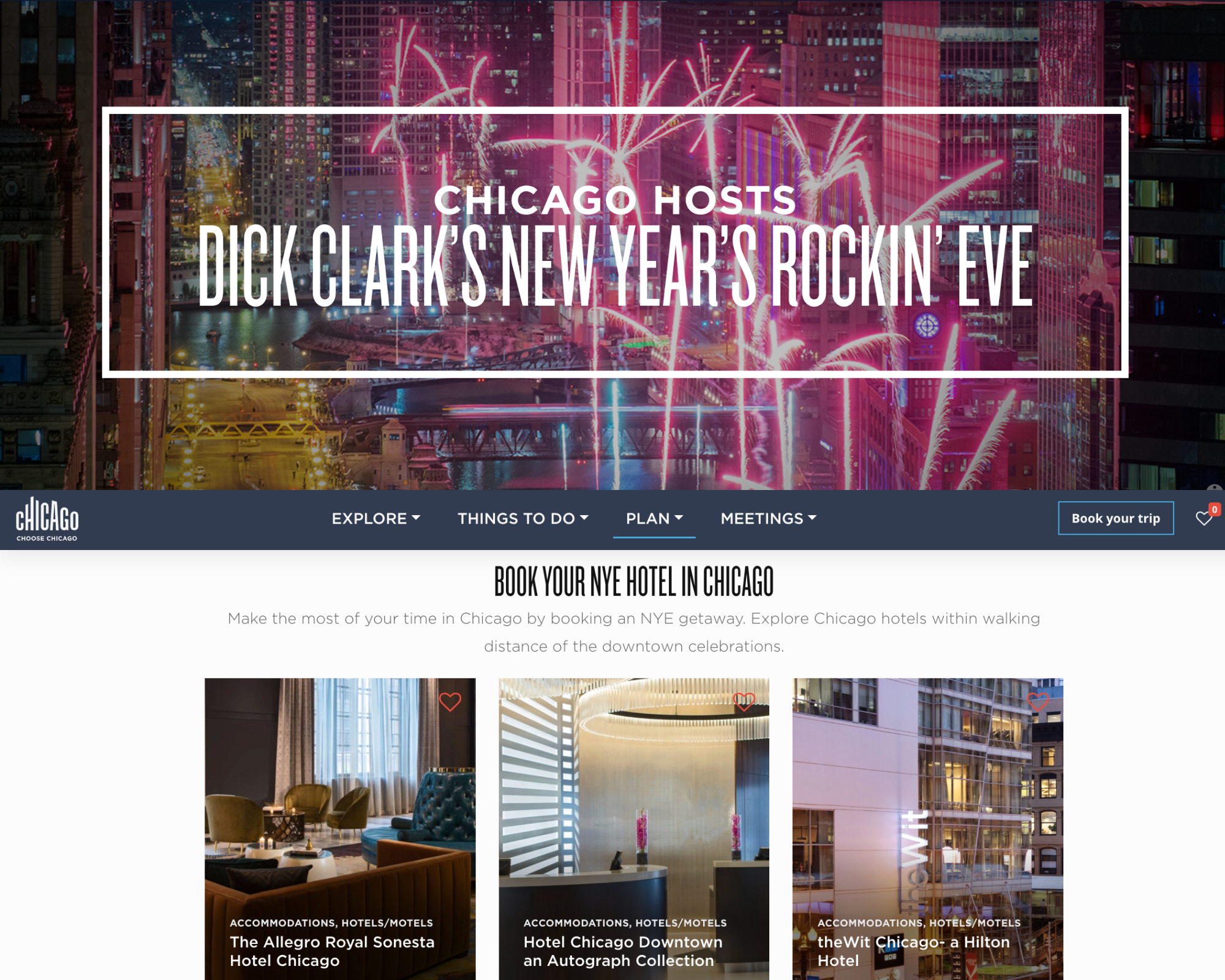
2026 promises to be an even bigger year for tourism. 2026 will launch with Chicago’s first ever Dick Clark’s New Year’s Rockin’ Eve with Ryan Seacrest countdown, bringing Chicago into the homes of millions of potential visitors. The opening of the OPC will provide another major boost to our thriving tourism industry. And… Pokemon Go Fest is returning to Millenium Park in 2026!
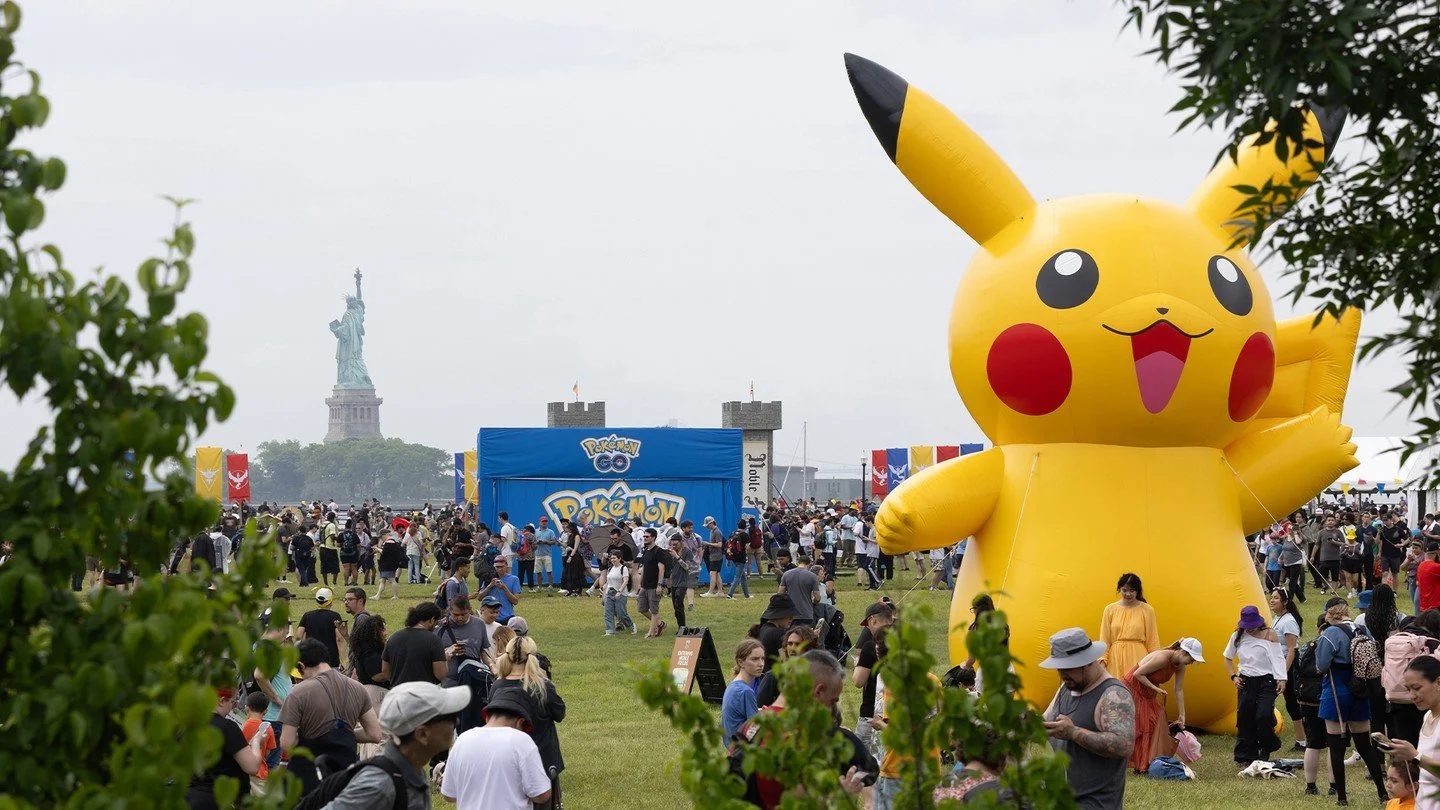
Pokémon GO Fest in Jersey City in 2025. Photographer unknown
As the city’s tourism map shifts southward, mid-Southside cultural institutions and programs will be a primary driver in attracting local, regional, national and international visitors; extending their stays; encouraging them to spend money in Southside neighborhoods.
Economic multipliers
A previous post went into detail about anchor institutions and economic multipliers - if you’re unfamiliar with the concept or want a refresher. Communities across the Southside, who relied for decades on local manufacturing companies to sustain their local economies, have struggled to attract new anchor institutions to create a similar economic multiplier impact. And now, these communities must reckon with global corporations like Amazon which act as de facto economic vacuums, sucking local earnings out of communities before the money has had a chance to circulate through the local economy.
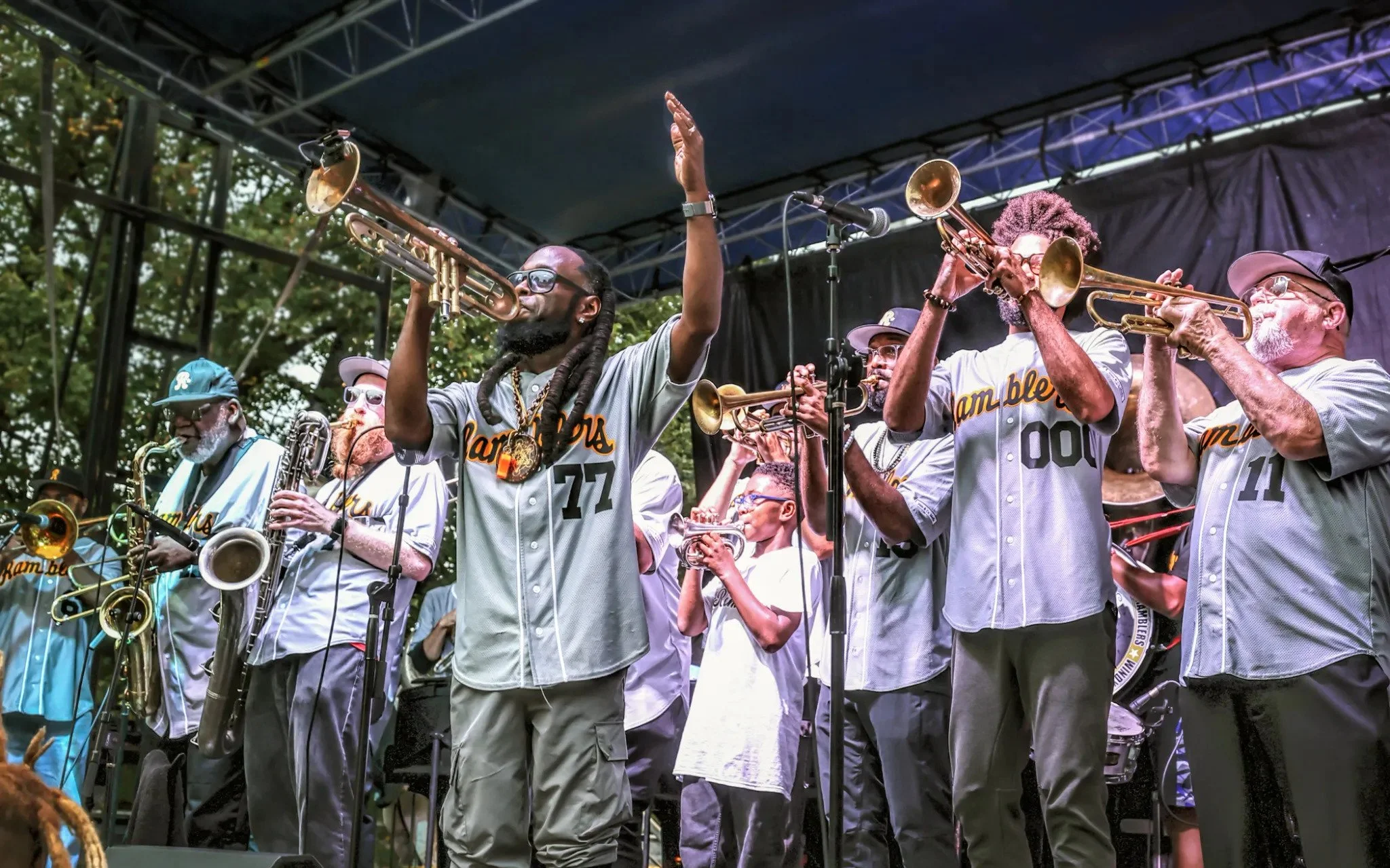
The Windy City Ramblers performing at the Hyde Park Jazz Fest - Credit: Marc Monaghan for the Chicago Reader
Small arts organizations and creative businesses are, dollar for dollar, highly effective hyperlocal economic multipliers. A small arts organization producing a concert in their community will hire local musicians, employ local audio engineers and local ushers, rent equipment from local suppliers, purchase food from a local caterer and flowers from the local florist. The audiences who attend that concert will purchase dinner from local restaurants, shop at local stores, and have drinks at local bars. The artists and local suppliers will spend much of the money they earn in their communities. Sure, much of the earnings of the local artists will eventually escape to Amazon purchases and Netflix subscriptions. But much more of the overall economic activity will circulate within the hyperlocal economy for longer than nearly any other industry.
Supporting local commercial corridors
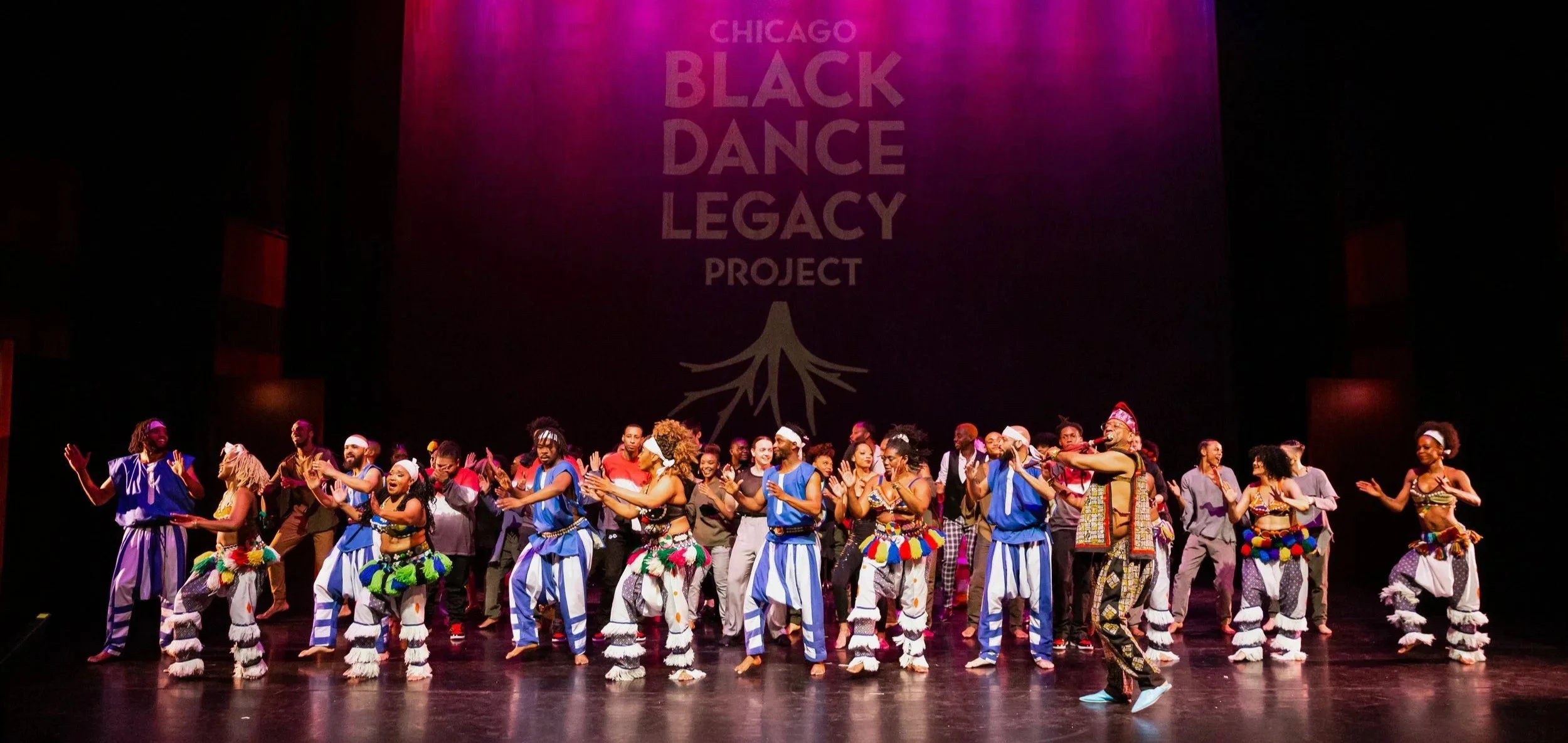
Joel Hall Dancers for the Chicago Black Dance Legacy Project - Credit: Rachel Neville
Cultural institutions also boost foot traffic along local commercial corridors. Theaters, museums, private dance studios, neighborhood art and community centers, local movie theaters, concert venues, etc. all attract hundreds of people to their local commercial corridor each week, all of whom may want or need to spend money at nearby stores, restaurants and service providers.
This increased foot traffic is especially vital for struggling South and West side commercial corridors. On a thriving commercial corridor like 53rd Street in Hyde Park, people can park their car and run multiple errands within a few blocks. For instance, if you were to park on 53rd between Blackstone and Dorchester you could purchase food from multiple establishments, get either a coffee or an adult beverage, have your photos or art work framed, buy yourself some new vinyl, get your pooch a toy, see a movie, buy cigars, and much more all within a 2 block walk. You might go there intending to pick up dinner and remember that you need cat food. Or you may have a few extra minutes and decide you want to look around Silverroom and end up buying yourself a little something. Each business on the corridor benefits from its proximity to others.
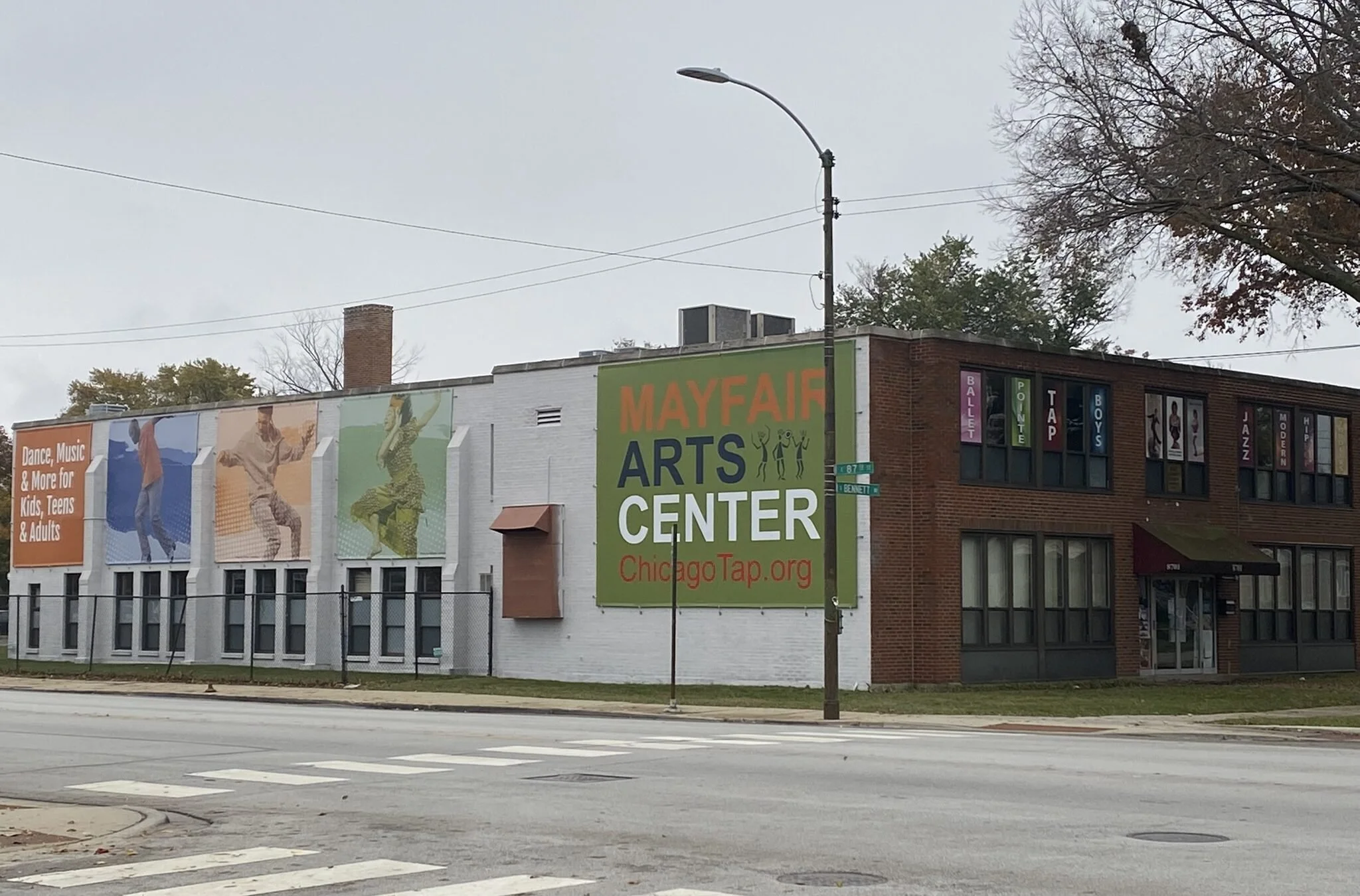
Mayfair Arts Center (MAC) - Credit: Chicago Human Rhythm Project
For small businesses on struggling corridors, the physical isolation and lack of foot traffic is an additional hurdle to sustainability. When a new cultural institution opens, the new foot traffic it attracts can provide a lifeline for existing establishments and an appealing draw for new businesses. Mayfair Arts Center (MAC), a program of Chicago Human Rhythm Project, recently opened its new home at the corner of 87th and Bennett in Calumet Heights. Several dance organizations share the collaborative space at MAC for weekly dance classes, rehearsals, informal performances and business development services. Founding Director, Lane Alexander, estimates these groups attract between 650 and 900 people each week. In addition to increased foot traffic, MAC and its small business neighbors intentionally cross-promote and refer customers to one another. Now, MAC and several local small businesses, landlords and entrepreneurs have begun collective advocacy to secure small business development funding. They’ve also found informal but vital ways to support one another directly. The childcare business across the street, "Kreating Young Minds Academy," made use of MAC’s facilities while it was renovating its home; the barber shop on the corner, Universal Concepts Barbershop, started using MAC’s laundry facilities for its towels and facecloths when a local laundromat closed. It’s the small business equivalent of borrowing a cup of sugar from your neighbor; but in this case the metaphorical cup of sugar helps ensure these local businesses can meet urgent, potentially disastrous, challenges.
So, how do we take advantage of this generational opportunity for the mid-Southside in 2026? What can we, as individuals, do to strengthen the mid-Southside’s creative economy?
1. Tell the story
The true local economic impact of the art, entertainment and recreation sector is deeply misunderstood. Funders, policymakers and artists all continue to hold deep-seated, longstanding and unexamined preconceptions about the arts and the creative economy that drive their decision making. Over the long term, we need better data to fully disprove these widely held but unsupported assumptions. But for now, as individuals, we need to tell the story of our impact on our communities.
2. Support arts and culture at the neighborhood scale.
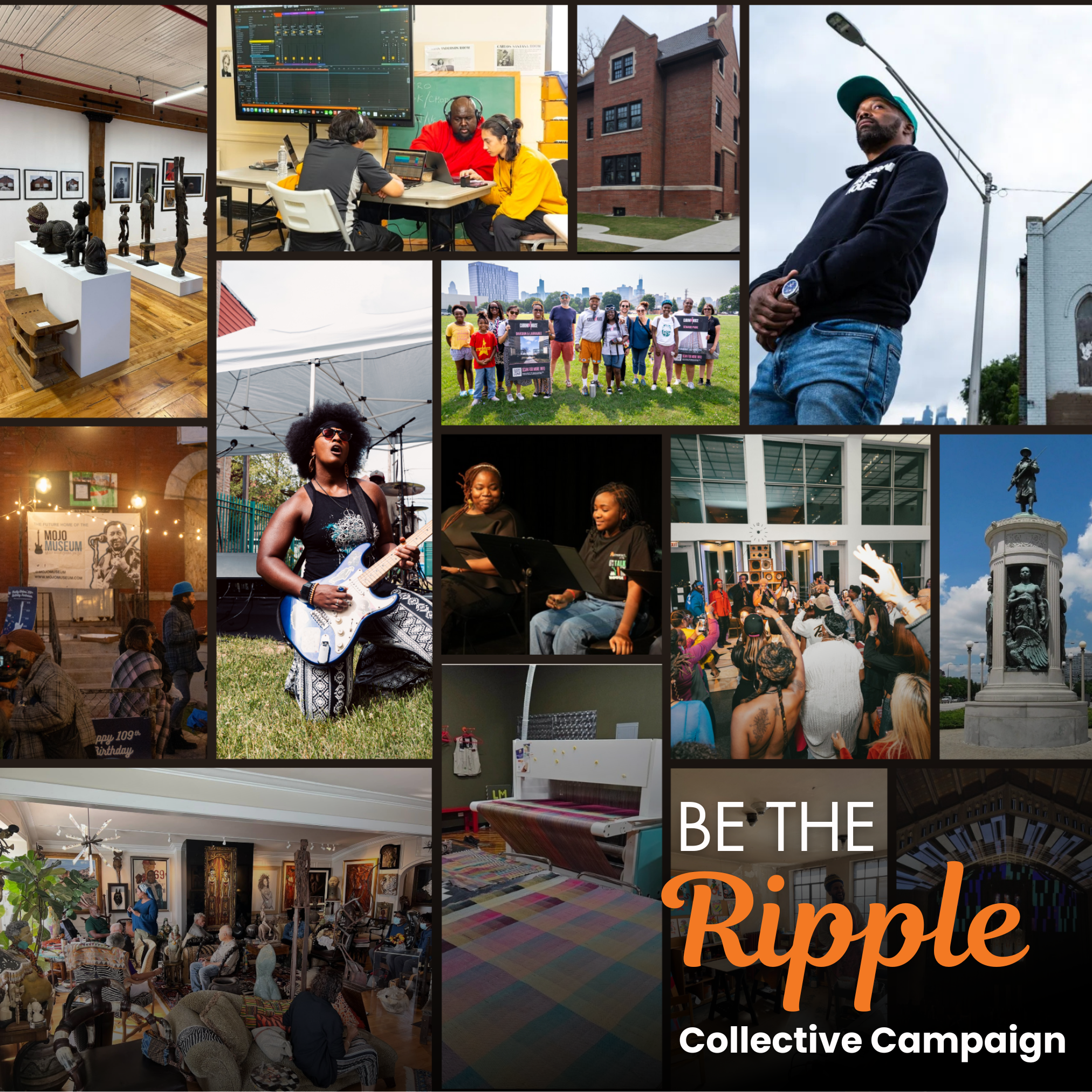
As you plan your holiday giving, please include your favorite local arts and culture organizations. Our local artistic community needs your support to thrive, especially now.
This year, Bustling Spaces has launched the Be The Ripple collective fundraising campaign, amplifying 10 incredible arts and social justice organizations that are making powerful change across Chicago. Please visit the Be The Ripple campaign website, where you can:
learn more about each of the amazing small arts organizations
make a donation to our collective fund and support all 10 organizations
or click through and give directly to any of the individual organizations.
3. Shop Local (and Creative!)
Buying your holiday gifts directly from local artists, artisans and creative businesses is a great way to keep your money circulating through your community.
For a list of amazing local Holiday gift ideas from Chicago creatives, check out our Holiday Hustle.
And if you or your organization have any holiday offerings, consider advertising in the Holiday Hustle. The $25 advertising fee goes directly into our “Be The Ripple” collective fundraising campaign. You can “Do The Hustle,” promote your work and support your fellow creatives!
Do you have a topic at the intersection of culture and urban planning that you’d like to write about? We welcome you to reach out to us at info@bustlingspaces.com.
We hope you will join us for this conversation. You can sign up for the newsletter here. Reach out to us at admin@bustlingspaces.com if you wish to talk about how Bustling Spaces LLC can support you as you manifest your vision for your community.
Just a quick note: Building Blocks is not connected to Bustling Spaces’ Funding Opportunities Newsletter. The Funding Opportunities Newsletter will continue to come out 2x each month. Our hope is to release Building Blocks once each month. Sign up here.