Vol. 7 - “All Together Now” - Towards a Collective Fundraising Ethos
The Building Blocks Column | Volume 7
An exploration of the role of arts, culture and heritage in economic and community development; past, present and future
Guest contributor: Paige Brown, Program Associate
Check out Building Blocks Volume 1-6 here
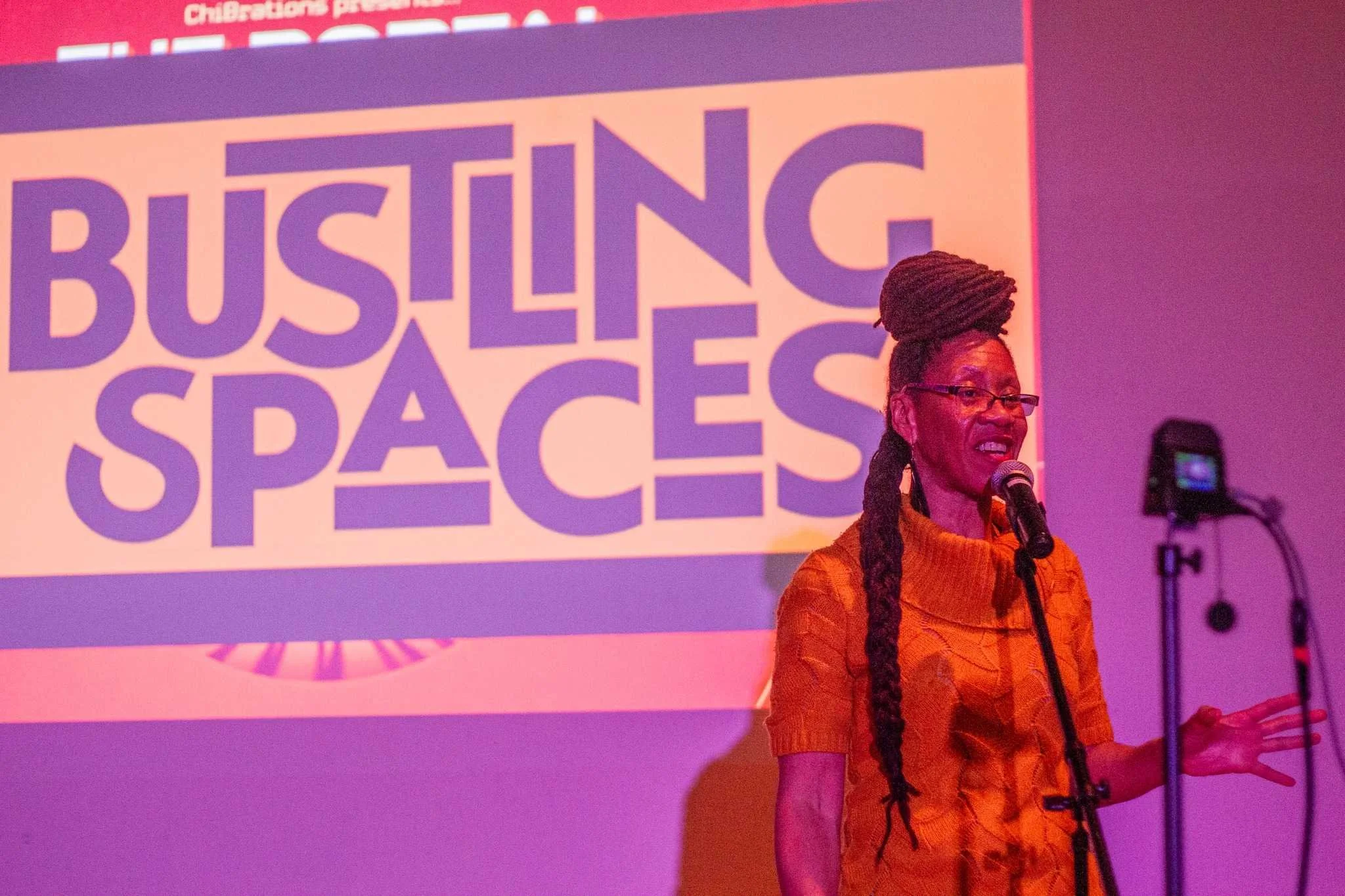
A full circle moment: speaking at “ChiBrations presents…THE PORTAL” in April 2025 - the place where I first met Henry Wishcamper, founder of Bustling Spaces - now sharing resources for funding opportunities citywide as a member of the team.
I’ll never forget how it felt the first time I wrote a successful grant. And quiet as it’s kept - it wasn’t that long ago.
In 2022, I was assisting an organization that was doing amazing violence-prevention work during the pandemic. I was working at my first job as a Development Associate at a different organization (I honestly hadn’t even known what the term meant in context when I first heard it), and had come across a grant in my research that seemed tailor made for their summer program. When I asked the staff if they’d ever received it before - they said they hadn’t. We gathered together, put things down on paper, crafted a budget, and before we knew it, we’d secured seed funding for the summer. 2 months later, another anti-violence grant just happened to open up for twice the amount; we re-used all of the language and calculations we’d just finished working on, submitted another application, and did it again.
The impact was immediately felt. The distance between “Have you heard of this grant?” to “We have $12,000!” was much shorter - and easier - than any of us had anticipated. I remember finding out at the office and doing a lap around the room. To me, this was the closest thing I’d ever experienced to waving a magic wand and getting money. In addition, we were able to allot some of the funding to another organizational partner, allowing them to invest in durable equipment that they used in their own programs far beyond that summer. That simple ripple effect was powerful. And it wasn’t lost on me that, at least in this instance, all that was needed to accomplish all this was information: information about where to look for funds and how to navigate the process of applying for them. Beyond that, they only needed some relatively simple structures put in place to facilitate that process.
Learning more about not just grants and grant writing, but the larger ecosystem where I lived and worked, and the astounding interweaving of arts, culture, creative entrepreneurial and grassroots community work that exists, I became more and more inspired to pass on what I knew. I wanted everybody to know more about this - my friends, my peers, amazing artists whose work I admired who had never gotten funding for their projects, and especially those who had been shut out of opportunities due to unjust, discriminatory systems, perpetuated both intentionally and unintentionally by those who support active disenfranchisement and those who simply don’t resist it. More and more, I began to reflect on how we were able to fund the summer program - “What would it look like to replicate this process of identifying an opportunity, using a collaborative workflow to apply, and securing needed funds that have impact beyond a single opportunity or a single org? Can a small amount of knowledge-sharing make these ripples larger?” Pursuing this question led me to finding others who were actively seeking and implementing those answers, which led me to Bustling Spaces.
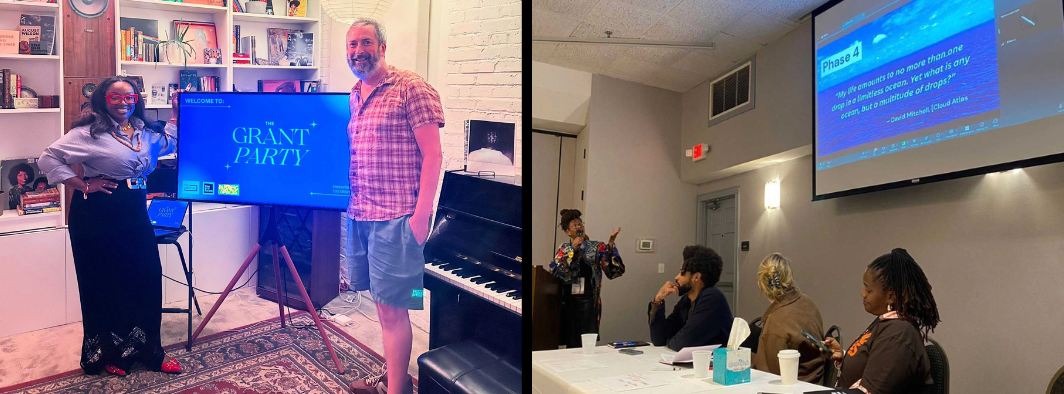
Bustling Spaces out in the artiverse - presenting at Too Creative’s Grant Party at The.BlkRoom and One State in the Arts & Humanities 2025 in Springfield
In my current context, working with multiple orgs and artists across the Arts & Culture sector on the South and West sides and beyond has led to multiple learnings, some of which don’t neatly correlate. One of the things I’ve learned is that even as federal money for Arts & Culture is contracting, there are more local organizations, communities and collaboratives pooling funds to specifically fill gaps for communities that are the least protected from funding shifts. As this is occurring, organizations are forming innovative creative partnerships.
From where I sit on the periphery, doing work *for* others but not having to directly sit in the hot seat, I have the luxury of remaining optimistic, of looking out on what can feel like a larger landscape of opportunity and saying “Just look around that corner! Don’t despair - there’s money there!”
Another reality, however, is something that arts administrators, educators, entrepreneurs, independent creatives, collectives and community leaders have known - it’s frankly not enough. Hope alone doesn’t keep the lights on, service doesn’t equal solvency, and the road to closed doors and shuttered venues was often paved with good intentions. The solution isn’t found in a series of funding cycles, either. And as much as I love navigating them and finding paths towards funding for clients and those in our networks - our communities and the institutions therein require more.
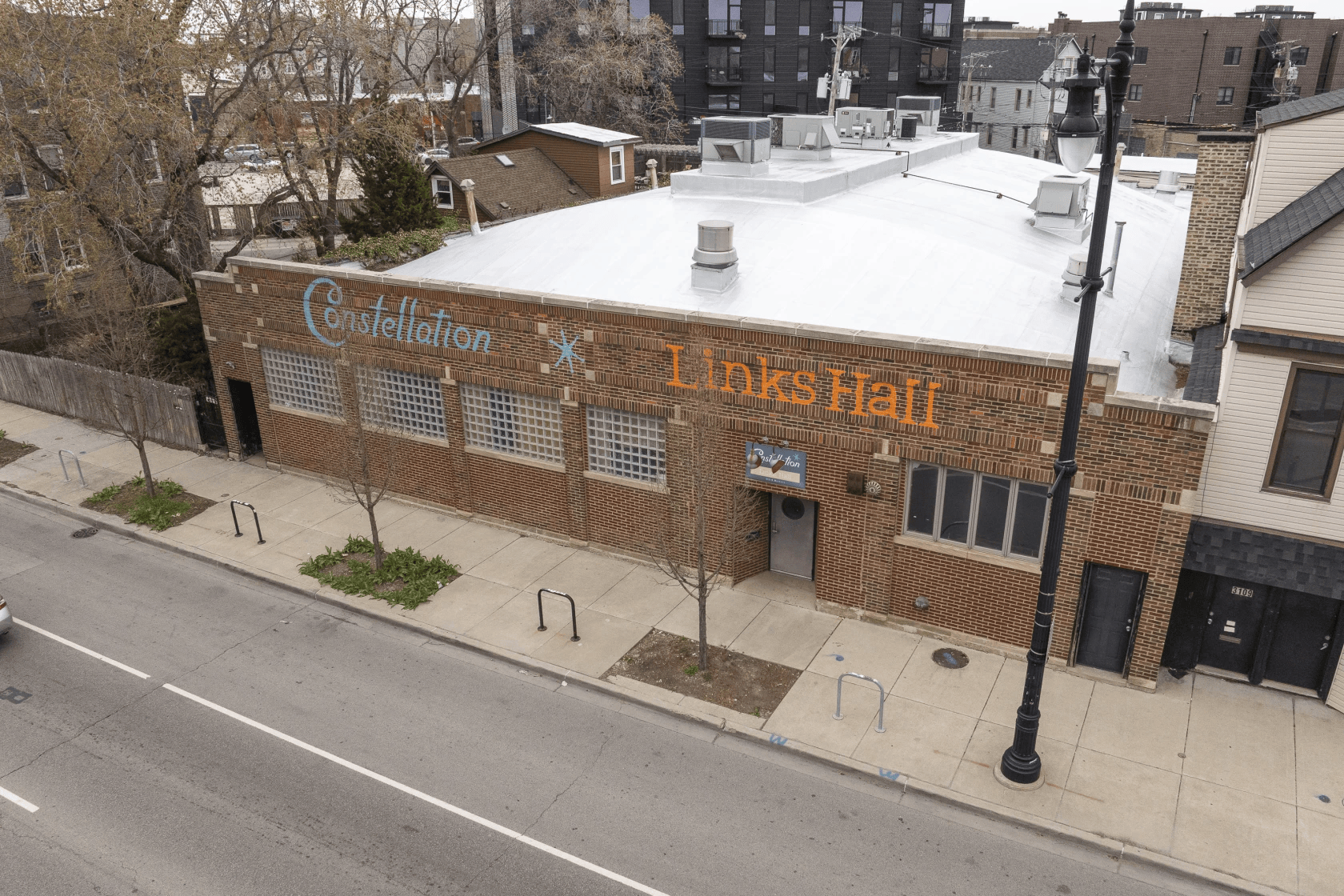
Links Hall, Tyler Pasciak LaRiviere for the Sun Times.
Read Links’ final update here, and the program for DUSK, their bittersweet sunset ceremony.
In order to sustain/protect/preserve the people and institutions that make our communities vibrant and healthy through cultural work, we must find a path that allows the work to continue - regardless of the time of year, the elected officials in office, the price of gas and eggs, or whether or not there’s an open call for funding. Although they ebb and flow, times of social, political, and economic upheaval will always be present in some way or another. How do we shore up the creative organizations in our sector to withstand those storms when they hit, so that they can bask in the sunshine when it reappears? And how do we make the solutions available not just to the select few organizations who always seem to make it through, but also the ones who might not?
We believe that part of the answer may lie in a simple way of working that most of us utilize every day, but don’t always apply to our individual organizational challenges.
Something that’s been transformative for me in this space is the power of working in a team of experts with strengths and competencies in areas that are often vastly different. This was evident when I first started working at Bustling Spaces, but became even more noticeable as we added members to our team. As we field myriad inquiries around issues like creative partnerships, board strategy and expansion, six- and seven-figure fundraising, the dizzying maze of laws, regulations and requirements of capital development, and more while navigating deadlines for all of the above, it’s imperative that we lean heavily on one another. In our meetings, our slack channels, our emails and our google comments, instead of working in silos or staying stuck when we hit a snag, we’re constantly asking “can someone chime in on this?” “Who knows this?” “Can we huddle around [insert challenge here]?” Sometimes the need for assistance isn’t simply a matter of expertise; a team member may be dealing with an extenuating circumstance - flooding, family, loss, or navigating some variation of the types of upheaval confronting the nation in recent years. Invariably, (and often within minutes), someone will tap in and take the wheel - a pitfall averted, a new workaround revealed, a novel solution found. Whereas individually we would’ve been stalled, through the power of the collective, we’re not only able to succeed, but to do so via a more viable, smoother route that we wouldn’t have discovered on our own.
Nice!
So……can we do this with, say…..fundraising?
Fundraising as a one-time initiative for a project, a campaign, or an event is a herculean task for any individual or organization, let alone developing a long-term fundraising strategy. Given the various ways we are explicitly and implicitly taught to think and act around money and resources in our society, in addition to navigating the extractive systems that dominate it in real time, most of us fundraise against a mental [and actual] landscape that is often bleak and unforgiving.
What does it look like to leverage the power of the collective to jointly address this challenge? How can we navigate not only questions around funding sustainability, but actions that help to raise funds, as a group?
Bustling Spaces’ newest response to this has been the formation of the pilot Collective Catalyst Cohort, an innovative development incubator designed to support growing creative organizations on Chicago’s South and West sides to reach their fullest potential, navigating their challenges and triumphs together as they work towards their goals.
This year, 5 organizations are rising to the challenge of facing the question posed above and answering it together.
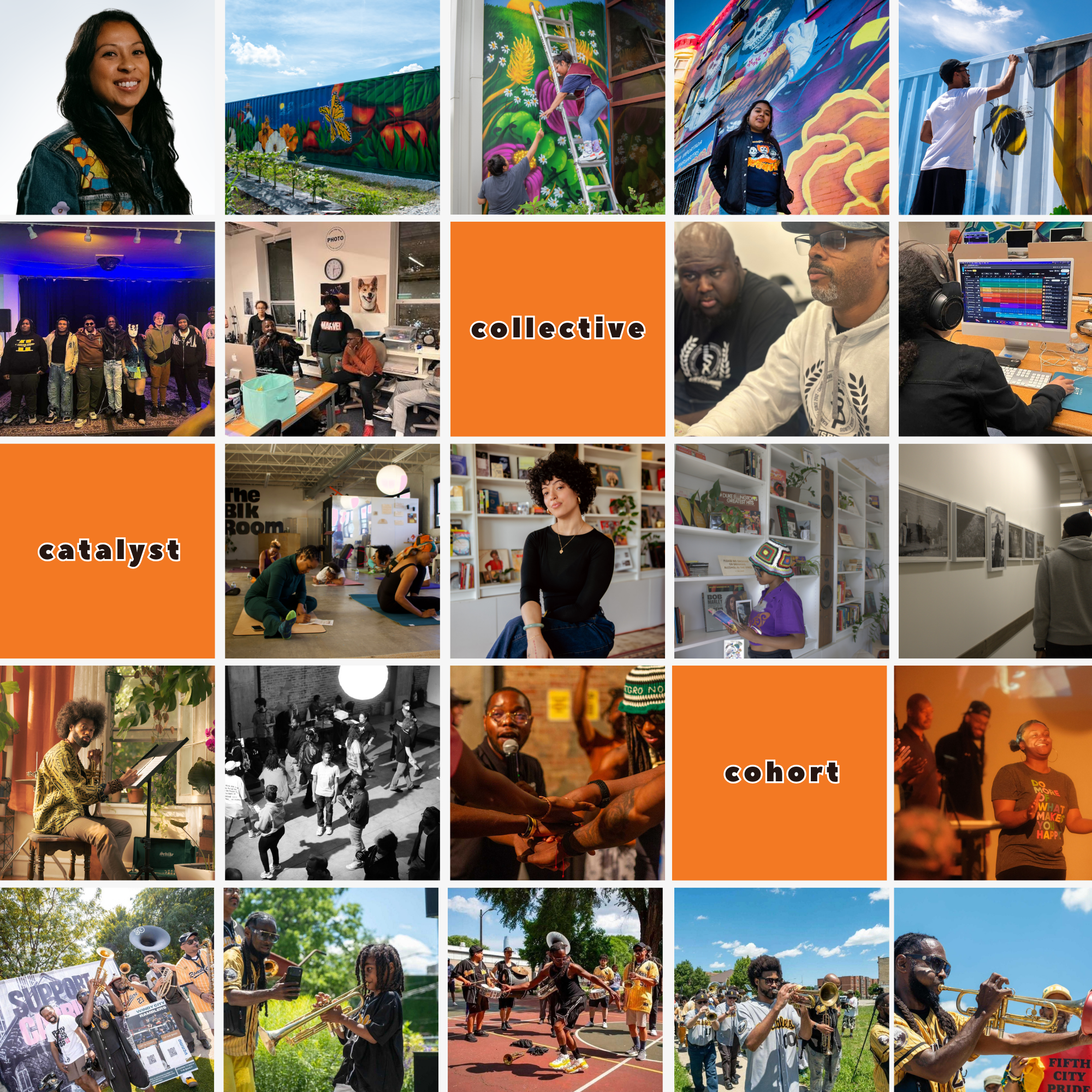
Collective Catalyst Cohort members (from top to bottom row) Zitlali Creative consulting, ISPro Academy, The.BlkRoom, ChiBrations, and the Windy City Ramblers
The members of the collective have been journeying with one another over the last few months as they’ve been shoring up the foundations of their individual organizations, amplifying their work, and looking at diverse means to gain funding, partners, and resources as benefits to pass on to the communities they serve. As a practical application, in a couple of weeks, we’ll be launching the campaign phase of the cohort - the We Are One Collective campaign. A two-pronged fundraiser / friendraiser and conversation, we’ll be actively raising funds for all 5 organizations in a joint campaign, with a goal to raise $20,000 by year’s end, while also elevating conversation around joint fundraising as an overall concept.
We’ve paired this year’s collective fundraising initiative with the cohort model to provide a stronger foundation for organizations to begin the conversations about their work with prospective funders and partners, their cohort peers, and with you, making the case not only for why it’s essential that their work be funded, but for how funding their peers *also* helps them. The cohort + campaign model allows for not only collaborative learning, but dynamic collaborative practice in real time.
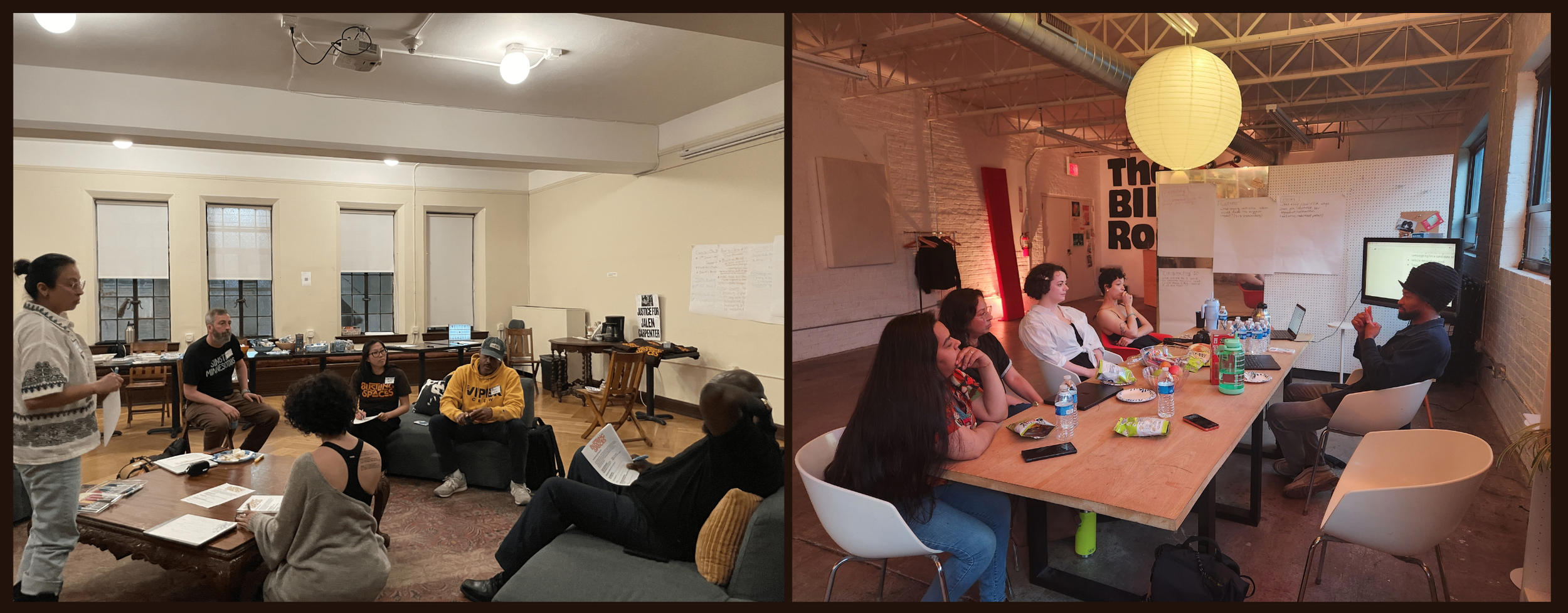
CCC members hard at work at 1st Presbyterian Church in Woodlawn and at The.BlkRoom
In addition, while we’re in the midst of the campaign–we also want to hear from you. We need to hear your stories and experiences around group fundraising and innovative methods to raise and share resources across collectives. Although this type of collaboration across organizations is far from new, it’s still viewed as counter-cultural in a society that pushes individualism, isolation, “survival of the fittest” competition, and extraction. How are you and those you know countering this and successfully fostering economic collaboration and growth with organizations/ individuals in your community?
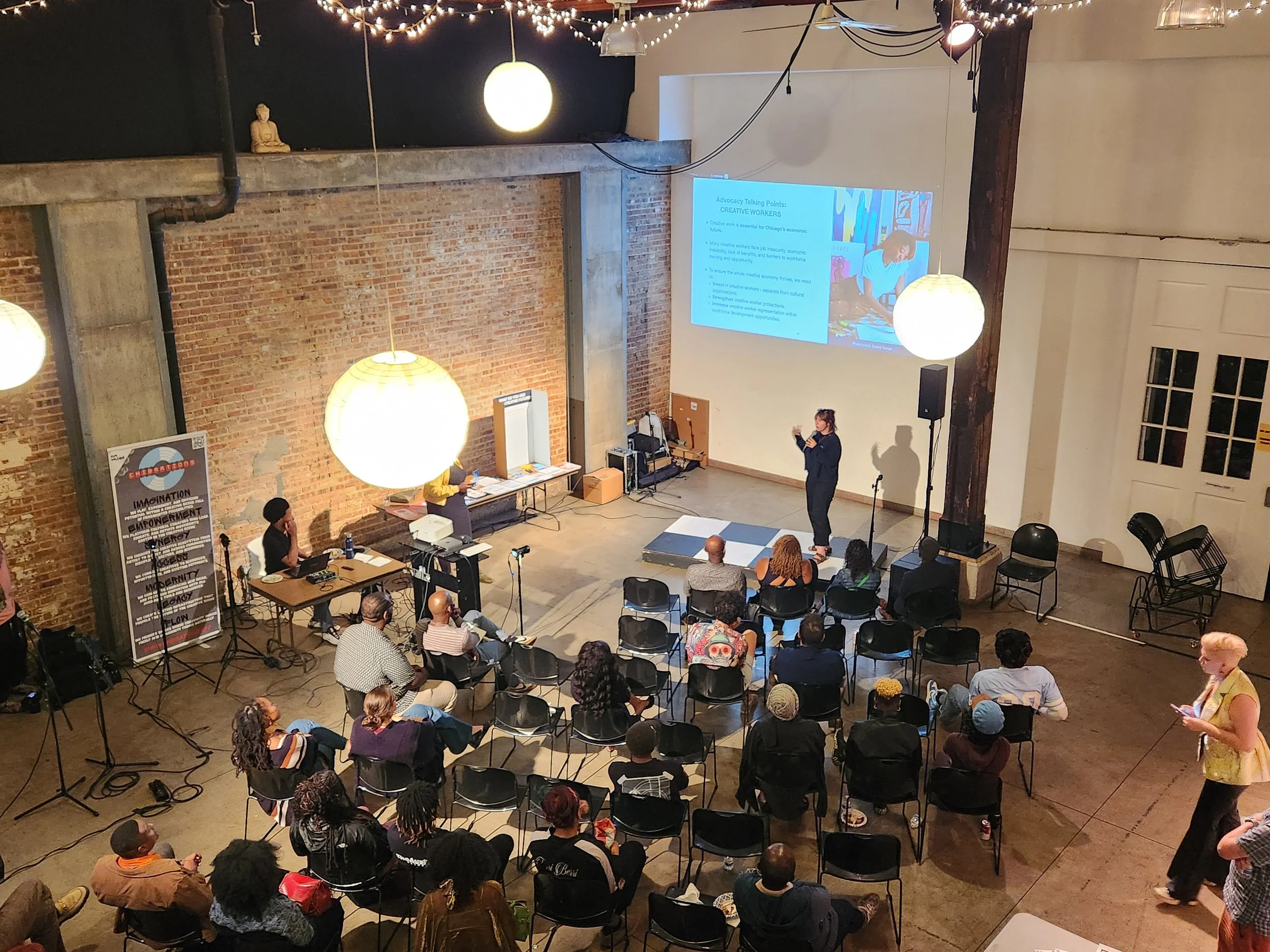
Nora Sharp of Arts Alliance IL presents Creative Economy data at the Creative Futures Roadshow - ChiBrations PORTAL, 9.29.26
We’ve observed many innovative methods happening across the city, especially sparked during the pandemic - joint benefit performances, shared galas, game night fundraisers hosted by multiple organizations, partnering with local businesses that host events or share a portion of their proceeds, etc. What’s your experience with fundraising as a collective? What have successes and failures been? Where are your areas of growth?
We also might tag you in the group chat. “Who knows more about this? Can someone chime in on this? Can I meet you in a huddle at 1PM?” Meet us in the comments, the DM’s, the email inbox (admin@bustlingspaces.com) , or the streets. What are you able to share with us and with others? The information and questions you choose to share can not only support our cohort’s efforts, but other organizations and creatives as well.
Last year, our collective campaign tagline was “Be The Ripple.” Any knowledge earned and shared is knowledge that can empower others, rippling far beyond any campaign to spark ideas for others in our ecosystem. We absolutely believe that this year - and every year - but as we moved through the year, with pressures mounting on all sides for our clients, our communities, and for us, another message emerged above this - “We Are One.”
It’s become absolutely clear that moving through this time in history will require more cooperation than before. Beloved arts institutions have shuttered, grassroots community offerings have paused, and funding for neighborhood creative initiatives has burned out (as well as the artists who ran those initiatives). If we reach out and proactively band together, creating coalitions across geographies and disciplines, with stronger organizations collectively anchoring smaller ones - we can preserve our institutions, our artists, and our communities before they reach a crisis point.
We rise, or fall, together - we have the power to decide which outcome we want to see.
As the beloved, late Frankie Beverly famously sings, “We’ve got so much - we could all be having so much fun.”
WE ARE ONE
Do you have a topic at the intersection of culture and urban planning that you’d like to write about? We welcome you to reach out to us at info@bustlingspaces.com.
We hope you will join us for this conversation. You can sign up for the newsletter here. Reach out to us at admin@bustlingspaces.com if you wish to talk about how Bustling Spaces LLC can support you as you manifest your vision for your community.
Just a quick note: Building Blocks is not connected to Bustling Spaces’ Funding Opportunities Newsletter. The Funding Opportunities Newsletter will continue to come out 2x each month. Our hope is to release Building Blocks once each month. Sign up here.